
The shift toward cloud-native testing
Cloud security has moved past simple network scans. As companies ditch physical servers for serverless setups and containers, the old testing playbooks don't work. Attackers now focus on cloud-native flaws that traditional tools miss.
We’re seeing a shift away from virtual machines towards serverless architectures, containers, and multi-cloud deployments. This introduces new complexities for security testers. Testing serverless functions, for example, requires understanding event triggers and execution contexts in a way that wasn’t necessary with traditional applications. Multi-cloud environments, while offering benefits like redundancy and cost optimization, drastically increase the attack surface.
Securing cloud environments presents unique challenges compared to on-premise infrastructure. The shared responsibility model, where security is a joint effort between the cloud provider and the customer, often leads to confusion and gaps in coverage. The dynamic and ephemeral nature of cloud resources also makes it difficult to maintain a consistent security posture. Frankly, finding qualified cloud security professionals is a major bottleneck for many organizations.
These changes necessitate a more proactive and continuous approach to security. Penetration testing must become an integral part of the software development lifecycle, not just a periodic exercise.
AWS: IAM and S3 are still the biggest risks
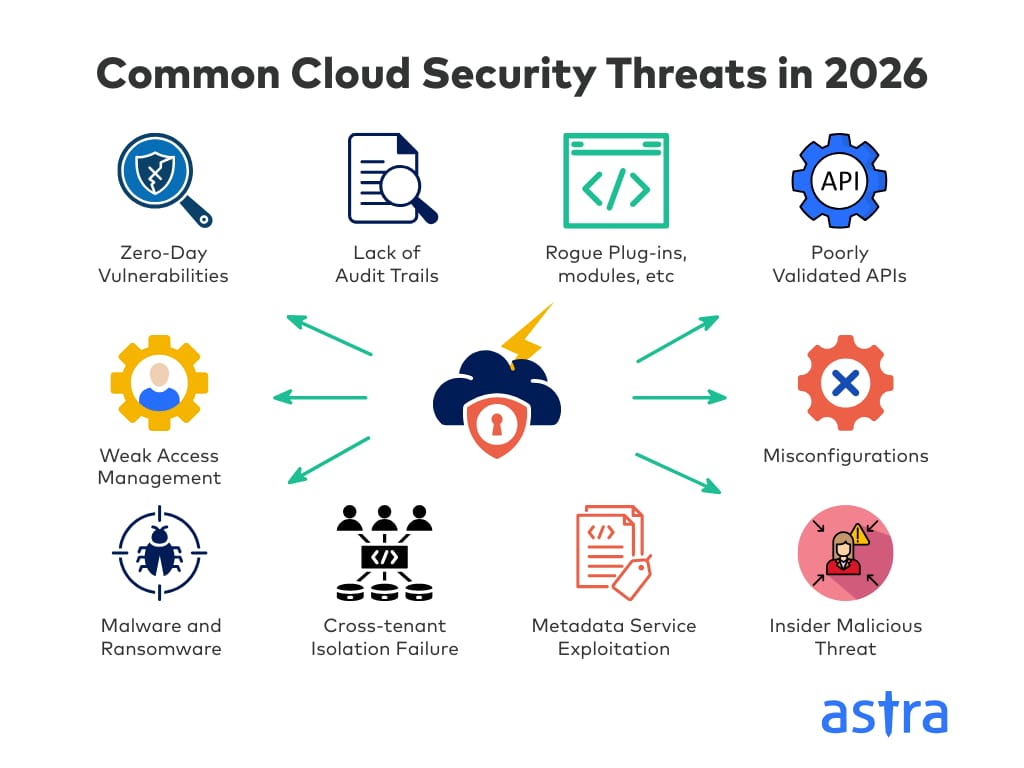
Amazon Web Services remains the dominant cloud provider, making it a prime target for attackers. A significant portion of AWS security incidents stem from easily exploitable misconfigurations. Overly permissive IAM roles are a persistent problem. Granting excessive permissions to users or roles allows attackers to escalate privileges and access sensitive data.
Publicly accessible S3 buckets continue to be a major source of data breaches. Many organizations fail to properly configure bucket permissions, leaving sensitive information exposed to the internet. Insecure security group settings are another common vulnerability. Allowing unrestricted inbound or outbound traffic can create pathways for attackers to compromise instances.
Cloud.gov sets specific testing requirements that act as a baseline for AWS. Most breaches I see come down to a simple chain: a misconfigured IAM role allows access to an S3 bucket, or an open security group port lets an attacker into an EC2 instance.
Testing Lambda functions and API Gateway endpoints also requires specific techniques. Attackers can exploit vulnerabilities in function code, such as injection flaws, or abuse API Gateway configurations to bypass authentication and authorization controls. Properly testing these components requires understanding the intricacies of AWS's serverless architecture.
Azure Security Assessment: Identity and Data Focus
Azure security assessments require a strong focus on identity management and data protection. Azure Active Directory (Azure AD) is central to Azure security, and misconfigurations in Azure AD can have far-reaching consequences. Compromised credentials can grant attackers access to a wide range of Azure resources.
Data protection in Azure relies heavily on Azure Key Vault for managing secrets and encryption keys, and Azure Storage encryption for protecting data at rest. Vulnerabilities in these services, or improper configuration of encryption settings, can lead to data breaches. I’ve noticed a lot of organizations relying on default settings in Azure Key Vault, which isn't a secure practice.
Azure Resource Manager (ARM) templates define the infrastructure as code, and vulnerabilities in these templates can introduce security flaws. For example, a template might inadvertently expose sensitive information or create insecure network configurations. Network security groups (NSGs) control network traffic, and misconfigured NSGs can allow unauthorized access to resources.
Azure Policy provides a mechanism for enforcing security standards and compliance requirements. Understanding how Azure Policy impacts security testing is crucial. A restrictive policy might block certain types of tests, while a poorly configured policy might allow insecure configurations to slip through.
Multi-Cloud Testing: Bridging the Gaps
Multi-cloud environments introduce significant complexities for security testing. Each cloud provider has its own unique security model, configuration options, and APIs. Maintaining consistent security policies and configurations across different clouds is a major challenge. It’s easy for inconsistencies to creep in, creating security gaps.
The lack of centralized visibility and control is another major issue. It can be difficult to get a comprehensive view of the security posture across all cloud environments. This makes it harder to identify and respond to threats. Different cloud providers also offer different security tools and services, further complicating the picture.
Differing compliance requirements add another layer of complexity. For example, organizations that handle personal data must comply with GDPR, while those in the healthcare industry must adhere to HIPAA. These regulations may have different requirements for data security and privacy in each cloud environment. It’s crucial to understand these differences and ensure that security testing covers all relevant compliance standards.
I'm not sure which tool wins the multi-cloud race yet. The market is messy. But relying solely on native tools like AWS Inspector or Azure Advisor creates silos. You need a single view to catch inconsistencies between providers.
- Centralize your logging so you aren't jumping between three different consoles during an incident.
- Unified identity and access management
- Consistent security policies
- Automated security testing
Advanced Techniques: Serverless and Container Security
Penetration testing serverless functions (like AWS Lambda and Azure Functions) requires a different mindset than traditional application testing. The attack surface is different. You’re not testing a long-running process; you’re testing a short-lived function that’s triggered by an event. Identifying vulnerabilities in function code, event triggers, and execution contexts is crucial.
Containerized applications (using Docker and Kubernetes) present their own set of challenges. Testing container images for vulnerabilities is essential. Attackers can exploit vulnerabilities in base images or application dependencies to compromise containers. Privilege escalation attacks are also a concern. A compromised container can potentially gain access to the underlying host system.
Injection flaws are a common vulnerability in serverless functions and containerized applications. Attackers can inject malicious code into function inputs or container environment variables to execute arbitrary commands. It's important to test for these vulnerabilities using techniques like fuzzing and static analysis.
The unique attack surface of these technologies demands specialized tools and techniques. Traditional web application firewalls (WAFs) may not be effective at protecting serverless functions or containerized applications. Organizations need to adopt security solutions that are specifically designed for these environments.
Where automation fails
Automation is playing an increasingly important role in cloud penetration testing. Vulnerability scanners, configuration management tools, and continuous monitoring solutions can help identify and mitigate security risks more efficiently. However, automated tools are not a silver bullet. They can only detect known vulnerabilities and misconfigurations.
Infrastructure as Code (IaC) scanning is a particularly promising area. By scanning IaC templates (like Terraform and CloudFormation) for security issues early in the development lifecycle, organizations can prevent insecure configurations from being deployed in the first place. Tools like Checkov and Terrascan are becoming increasingly popular.
I think we'll see more AI-powered testing tools emerge in the next few years. These tools could potentially automate tasks like vulnerability discovery and exploit generation. However, it’s important to remember that AI is not a substitute for human expertise. AI-powered tools can assist testers, but they can't replace the critical thinking and problem-solving skills of a skilled penetration tester.
The limitations of automated tools underscore the continued need for manual testing. Manual testing allows testers to explore complex scenarios and identify vulnerabilities that automated tools might miss. A hybrid approach, combining automation with manual testing, is often the most effective.
Cloud Security Posture Management (CSPM) & Cloud Workload Protection Platform (CWPP) Comparison - 2026 Outlook
| Tool | Vulnerability & Misconfiguration Detection | Compliance & Reporting | Infrastructure as Code (IaC) Security | Runtime Protection |
|---|---|---|---|---|
| Prisma Cloud | Comprehensive, strong focus on both host and container vulnerabilities. | Extensive, supports many frameworks; detailed reporting capabilities. | Strong IaC scanning, integrates well with CI/CD pipelines. | Robust, behavioral analysis and threat detection. |
| Wiz | Agentless, excels at identifying cloud configuration risks quickly. | Good coverage of common compliance standards; reporting is focused on risk prioritization. | IaC scanning capabilities are developing, with increasing integration support. | Focuses on runtime risk detection via cloud provider APIs. |
| Orca Security | Agentless, side scanning for broad visibility; strong on identifying sensitive data exposure. | Compliance reporting is present but may require more customization. | Limited native IaC scanning; relies more on runtime analysis to detect IaC-related issues. | Strong runtime threat detection, particularly for data plane vulnerabilities. |
| Lacework | Good vulnerability detection, particularly within containerized environments. | Compliance reporting is available, but may require significant configuration. | IaC scanning is present, but may not be as mature as dedicated IaC security tools. | Strong runtime protection, with behavioral analysis and anomaly detection. |
| Trend Micro Cloud One | Broad vulnerability coverage across multiple cloud services. | Comprehensive compliance reporting, with pre-built policies. | IaC scanning available as part of broader security suite. | Good runtime protection, with integration with other Trend Micro security products. |
Qualitative comparison based on the article research brief. Confirm current product details in the official docs before making implementation choices.

No comments yet. Be the first to share your thoughts!