

Why 2026 Changes the Cybersecurity Landscape
Cybersecurity is no longer a back-office IT function; it is the foundation of business continuity. As organizations integrate more complex digital workflows, the perimeter of protection has dissolved. Today, security requires the convergence of people, processes, and technology to shield operations from an increasingly sophisticated threat environment Cisco.
The year 2026 marks a shift in how threats are constructed and delivered. Artificial intelligence has lowered the barrier for attackers, allowing even small groups to launch large-scale, automated campaigns. Simultaneously, supply chain complexity has expanded the attack surface. A vulnerability in a single software vendor or cloud provider can compromise thousands of downstream customers instantly.
This convergence means that traditional perimeter defenses are insufficient. Security teams must now prioritize visibility across hybrid environments and rapid incident response capabilities. The cost of inaction has risen sharply, with downtime and data breaches impacting brand trust and regulatory compliance directly. Understanding these structural changes is the first step in building a resilient defense strategy for the coming year.
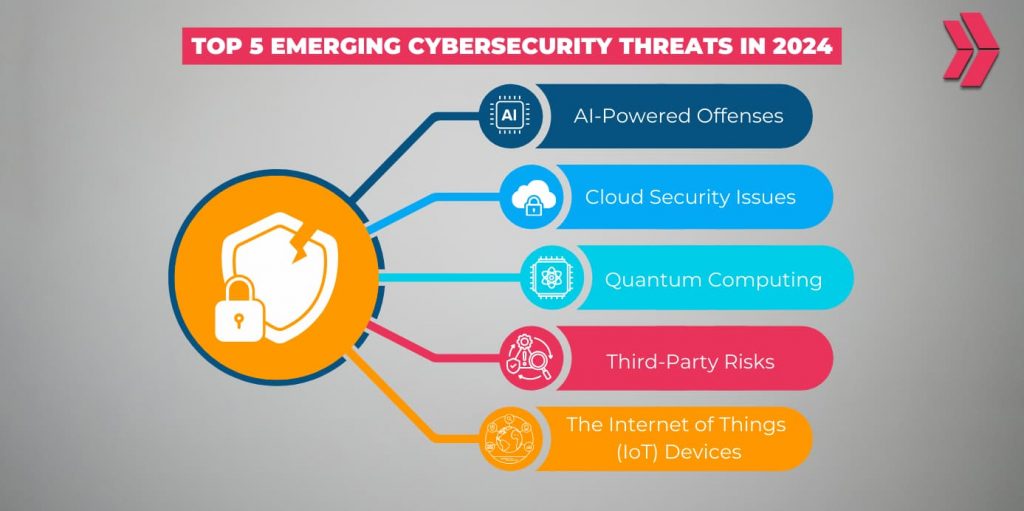
5 Cybersecurity Threats to Watch in 2026 and How to Stop Them
The landscape of digital threats is evolving rapidly. To stay ahead, organizations must understand the specific vectors attackers are exploiting. Below are the five most critical cybersecurity threats expected to dominate 2026, along with actionable strategies to mitigate them.
1. AI-Generated Phishing and Social Engineering
Attackers are leveraging generative AI to create highly convincing phishing emails, voice clones (vishing), and deepfake videos. These attacks are personalized at scale, making them difficult to detect through traditional keyword filtering. For example, an attacker can analyze an employee’s LinkedIn profile to craft a message that mimics a colleague’s writing style and references internal projects.
Mitigation Strategy: Implement AI-driven email security gateways that analyze semantic patterns and sender behavior rather than just headers. Conduct regular, simulated phishing campaigns to train employees to recognize subtle inconsistencies in tone and urgency.
2. Supply Chain Software Compromises
As businesses rely more on third-party vendors and open-source libraries, the attack surface expands. A single compromise in a widely used software library or cloud service provider can cascade across thousands of organizations. The 2026 threat landscape will see increased targeting of CI/CD pipelines to inject malicious code before it reaches end-users.
Mitigation Strategy: Adopt a Zero Trust architecture for all vendor integrations. Regularly audit third-party dependencies using Software Composition Analysis (SCA) tools and enforce strict access controls within your development pipelines.
3. Ransomware-as-a-Service (RaaS) Evolution
Ransomware groups are operating like legitimate businesses, offering "guarantees" and support to less technical affiliates. In 2026, we expect to see more "double extortion" tactics, where attackers not only encrypt data but also threaten to leak sensitive information publicly if the ransom is not paid. Additionally, "triple extortion" may emerge, involving harassment of customers or partners.
Mitigation Strategy: Maintain immutable, offline backups of critical data. Test restoration procedures regularly. Ensure your incident response plan includes communication protocols for potential data leaks, and consider cyber insurance that covers extortion costs and PR management.
4. IoT and OT Device Vulnerabilities
The proliferation of Internet of Things (IoT) devices in corporate offices and Operational Technology (OT) in industrial settings creates numerous entry points. Many of these devices have weak default security, lack patching capabilities, and are never monitored by traditional security tools. Attackers can use compromised IoT devices as a foothold to pivot into the main network.
Mitigation Strategy: Segment IoT and OT networks from critical business systems. Implement network access control (NAC) to ensure only authorized devices can connect. Disable unused ports and services on these devices and monitor for unusual traffic patterns.
5. Cloud Misconfigurations and Identity Theft
As migration to multi-cloud environments accelerates, misconfigurations remain a leading cause of data breaches. Exposed storage buckets, overly permissive IAM (Identity and Access Management) roles, and unsecured APIs provide easy access for attackers. Combined with stolen credentials, these misconfigurations allow attackers to move laterally across cloud environments.
Mitigation Strategy: Use Cloud Security Posture Management (CSPM) tools to continuously monitor for misconfigurations. Enforce the principle of least privilege for all IAM roles and enable Multi-Factor Authentication (MFA) everywhere, especially for administrative accounts.
Essential Network Security Strategies for 2026
Protecting your business requires moving beyond basic antivirus. The most effective cybersecurity approach in 2026 relies on three foundational pillars: Zero Trust architecture, multi-factor authentication, and regular security audits. These strategies create layers of defense that stop attackers before they reach critical data.
Zero Trust architecture
Zero Trust operates on a simple principle: never trust, always verify. Instead of assuming anyone inside your network is safe, you verify every user and device before granting access. This limits the damage if a single account is compromised, containing the breach to a small segment rather than the entire system.
Multi-factor authentication (MFA)
MFA adds a second layer of identity verification, such as a code from your phone or a biometric scan. Even if attackers steal a password, they cannot access your systems without the second factor. This single change blocks the majority of automated account takeover attacks.
Regular security audits
Automated tools miss configuration errors and outdated software. Regular audits, guided by frameworks like NIST, identify these gaps. Think of audits as a health check for your digital infrastructure, revealing weak points before criminals exploit them.

As an Amazon Associate, we may earn from qualifying purchases.
Frequently Asked Questions About Cybersecurity
Is cybersecurity too expensive for small businesses?
Protecting your business doesn’t require a massive budget. Basic cybersecurity measures like multi-factor authentication (MFA), regular software updates, and employee training are often free or low-cost. These foundational steps block the majority of common attacks, making robust defense accessible regardless of company size.
Do I need technical expertise to secure my systems?
Not necessarily. Many modern cybersecurity tools are designed for ease of use, featuring automated threat detection and one-click fixes. For complex infrastructure, managed security service providers (MSSPs) can monitor your network 24/7, allowing you to focus on operations while experts handle the threats.
How does AI impact cybersecurity threats?
Artificial intelligence is a double-edged sword. While attackers use AI to create sophisticated phishing emails and automate vulnerabilities, defenders use it to detect anomalies in real-time. Implementing AI-driven security solutions helps identify and neutralize threats faster than human analysts alone could manage.
What is the most important step to prevent breaches?
Human error remains the weakest link. Regular, engaging training that simulates real-world attacks like phishing helps employees recognize and report suspicious activity. Combining this awareness with technical controls creates a layered defense that significantly reduces risk.
No comments yet. Be the first to share your thoughts!